Loading content...
DOSSIER_REF: 001-AI // ISLAMABAD, PAKISTAN [33.6844° N, 73.0479° E]ISLAMABAD, PAKISTAN [33.6844° N, 73.0479° E]
I DESIGN PRODUCTS.
I ENGINEER INTELLIGENCE.
I’m Mirza Mahad Baig, an AI Product Engineer with nearly six years of product design and UI/UX experience, practical AI engineering expertise, and hands-on full-stack experience. I turn complex ideas into understandable, working AI products.
● OPEN TO AI PRODUCT ENGINEERING AND APPLIED AI OPPORTUNITIES
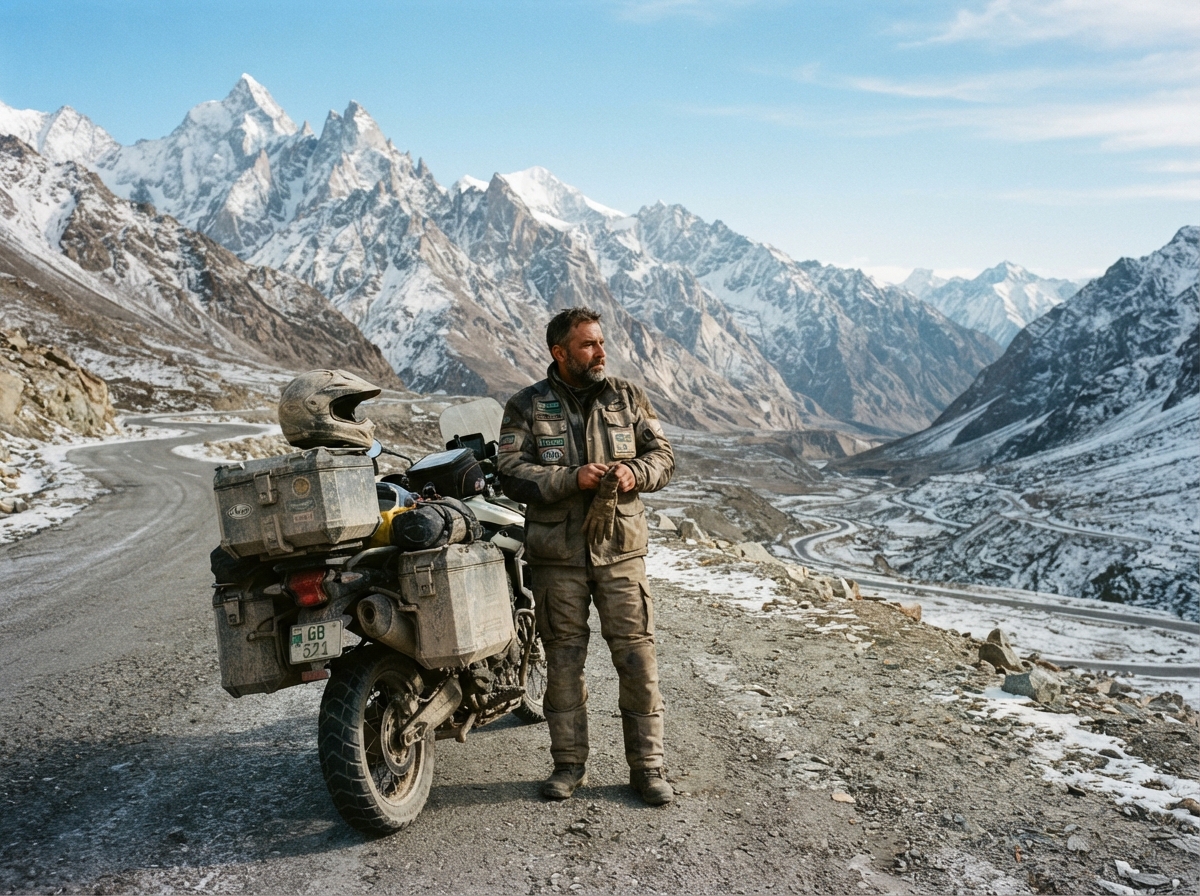
PLATE 01 // FIELD NOTEBOOK
PAKISTAN-CHINA HIGHWAY
OFF-SCREEN: TWO WHEELS, LONG ROADS, HIGH PLACES.ALT: 4,693M
Rode to Khunjerab Pass, one of the world’s highest paved international border crossings, on my motorcycle.
ROUTE_REF: N-35 KARAKORAM HIGHWAYKHUNJERAB PASS // 4,693 M
COORDINATES: 36.8497° N, 75.4292° EDOCUMENTARY ARCHIVE
●PRODUCT DESIGNFULL-STACK IMPLEMENTATIONAI INTEGRATIONEVALUATION
“I like owning the space between the idea and the working system.”
METRIC BLOCK // 01
~6 Years
Product Design & UI/UX Experience
Nearly six years designing complex SaaS applications, user flows, design systems, and developer-ready interfaces across enterprise domains.
STATUS: PRODUCTION VERIFIED
METRIC BLOCK // 02
500+
Busyfile Production Screens
Designed comprehensive end-to-end architectures for client, firm-admin, operations, and super-admin multi-tenant taxation workflows.
STATUS: ENTERPRISE DEPLOYED
METRIC BLOCK // 03
Grounded
RAG, Agents & ML Query Routing
Hands-on AI systems: In-process ONNX routing (<5ms), LangGraph deterministic workflows, Qdrant vector retrieval, and strictly cited RAG.
STATUS: ARCHITECTURE TESTED
METRIC BLOCK // 04
Full-Stack
Next.js, FastAPI & PostgreSQL
Production-grade implementations using React 19, TypeScript strict mode, Python 3.11, SQLAlchemy async, and Dockerized infrastructure.
STATUS: ZERO-DOLLAR RUNTIME
INDEX 01 // PRODUCTION WORK & ARCHITECTURES
Selected Work
CASE // 01AI Product
TidyOS
A local-first filesystem agent that understands files, protects developer workspaces and makes every action reversible.
TidyOS is a local-first desktop agent for understanding, retrieving and organizing files. It extracts text from documents and images, combines semantic search with SQLite FTS5 and proposes useful names and destinations. Its central design problem is safety: it detects protected repositories, restricts operations to approved roots, records file actions in an audit ledger and supports rollback. Background monitoring uses stabilization checks so partially downloaded files are not processed prematurely.
PythonSQLiteSQLite FTS5LangGraphWatchdog
2026·AI Product Engineer
Read Case StudyCASE // 02AI Product
TripHisaab
A local-first Android expense companion that turns WhatsApp-style messages into a reliable trip ledger.
TripHisaab explores expense tracking in the conversational interface people already use while travelling. The Android application pairs a WhatsApp interaction layer with a local Room ledger. Groq-assisted parsing converts natural-language messages into structured expenses, while deterministic accounting rules retain control of amounts, balances, dated entries, corrections and duplicate handling. Location-aware summaries help users understand spending across different stops without making cloud storage the default source of truth.
KotlinJetpack ComposeAndroidRoomGroq
2026·Android and AI Product Engineer
Read Case StudyCASE // 03AI Product
CardioScan AI
An academic decision-support prototype for paired stress and rest myocardial perfusion imaging.
CardioScan AI explores computer-assisted analysis of paired stress and rest MPI SPECT images. The research compared VGG16, ResNet50V2 and DenseNet121 transfer-learning backbones on a six-channel representation formed from the paired images. The web system combines a Next.js clinical dashboard, a FastAPI and TensorFlow inference service, vessel-aware LAD, LCX and RCA outputs, Supabase history and a Groq-generated clinical-style report with a deterministic fallback. It is explicitly presented as research software, not a medical device or diagnosis system.
Next.jsReactTypeScriptTailwind CSSPython
2026·Machine Learning Engineer and Full-Stack Developer
Read Case StudyCASE // 04AI Product
Mahad AI Product Engineering Portfolio
An inspectable AI portfolio with governed content, retrieval, ML routing, agent orchestration and conversational interfaces.
Instead of attaching a generic chatbot to a static portfolio, Mahad designed the portfolio as an AI product. Sanity owns approved content; deterministic ingestion writes canonical documents and chunks to Neon PostgreSQL and a rebuildable vector index to Qdrant. FastAPI serves retrieval and a LangGraph assistant, while an in-process ONNX classifier routes requests before expensive generation. The text assistant streams cited answers through SSE. A persistent ElevenLabs conversational companion is the next channel, sharing the same grounded knowledge and capped to two-minute voice sessions.
Next.jsReactTypeScriptTailwind CSSFastAPI
2026·AI Product Engineer and System Designer
Read Case StudyCASE // 05AI Product
Busyfile
A white-label SaaS platform for accounting firms, their clients and internal service operations.
Busyfile began as a direct-to-consumer business-formation product and evolved into a B2B white-label platform that accounting firms could offer under their own brands. Mahad led product design across client onboarding, firm administration, internal operations and super-admin experiences. The system grew beyond formation into bookkeeping, tax and compliance services, requiring reusable patterns, role-specific information architecture and a design system that could scale without turning each service into a separate product.
FigmaProduct StrategyProduct DiscoveryUser ResearchInformation Architecture
2024–2026·Founding Product Designer
Read Case StudySYSTEM ARCHITECTURE // THE INTERSECTION
Where Design Meets Intelligence
Most teams suffer from a gap between product designers who don’t understand model constraints, and AI engineers who struggle with user experience and product flows. I operate directly at the intersection.
1. Product Design & UI/UX
Nearly six years leading product discovery, complex SaaS workflow architecture, enterprise design systems in Figma, user research, and comprehensive developer handoffs.
- → 500+ Busyfile SaaS Screens
- → Information Architecture & User Flows
- → Multi-Tenant Design Systems
2. AI Engineering
Building deterministic agent workflows, heading-aware RAG pipelines, Qdrant vector retrieval, in-process ML classifiers with ONNX Runtime, and LangSmith automated evaluation.
- → <5ms ONNX Query Router (CPU)
- → LangGraph State Machine & Guardrails
- → Strictly Cited Retrieval (Hit@K)
3. Full-Stack Product
Shipping responsive, accessible web applications with Next.js 15 App Router, React 19, strict TypeScript, Python FastAPI async backends, Neon PostgreSQL, and Cloudflare Pages.
- → Next.js 15 & Static Export Native
- → Async FastAPI & SSE Telemetry
- → Zero-Dollar Operating Budget
CAREER TRAJECTORY // PROGRESSION
How I Got Here
01 // 2019–2022
Brand & Visual Design
Design fundamentals, typography, and identity systems.
02 // 2022–2023
Product Design & UI/UX
Web and mobile interfaces, user flows, and wireframing.
03 // 2023–2024
Complex Enterprise SaaS
Busyfile multi-tenant tax architecture and 500+ screens.
04 // 2024–2025
Frontend & Full Stack
Next.js, TypeScript, React Server Components, and APIs.
05 // 2025–2026
Applied AI Engineering
RAG systems, LangGraph graphs, and FastAPI backends.
06 // PRESENT
AI Product Engineer
Owning the entire loop: discovery, design, code, and evaluation.
SYSTEM_FEATURE: TALK TO MAHADSSE STREAMING + ONNX ROUTER + STRICT CITATIONS
Inspectable AI Assistant & Companion
Unlike standard portfolio assistants that merely wrap an OpenAI prompt, Talk to Mahad is an inspectable RAG pipeline. Every answer is grounded in verified Sanity CMS documents, classified with an in-process ONNX model in <5ms, and orchestrated through a LangGraph state machine.
Also available as a conversational voice companion via ElevenLabs real-time transport with honest 120-second session limits and monthly quota protection.
TRY ASKING:
→ "What were Mahad's key design contributions on Busyfile?"
→ "Why use ONNX Runtime instead of an LLM for query routing?"
→ "What are the trade-offs of the $0.00/mo Cloudflare and Neon architecture?"
TELEMETRY_PIPELINESTATUS: READY
ROUTER_LATENCY:< 5 MS (CPU)
VECTOR_INDEX:QDRANT COSINE
CANONICAL_SOURCE:NEON POSTGRESQL
EVAL_GATE:LANGSMITH TRACED
VOICE_CHANNEL:ELEVENLABS CONV.
PUBLICATIONS // ARTICLES & MONOGRAPHS
Writing
September 202614 min read
I Decided My Portfolio Should Be the Project
I am turning my portfolio into a complete AI product rather than placing an AI feature on top of a static website. This first update explains my move from product design into AI Product Engineering, what has been built so far, and the planned path through managed content, RAG, ML routing, agents, observability and voice.
#AI Product Engineering#Build in Public
ReadOFF-SCREEN // EXPEDITIONS & EXPANSES
Roads, Altitude and Everything Between
Beyond interface design and model architectures, I ride motorcycles through remote high-altitude mountain passes. Explore 35mm documentary photography and field notes from the Karakoram Highway to Khunjerab Pass.